
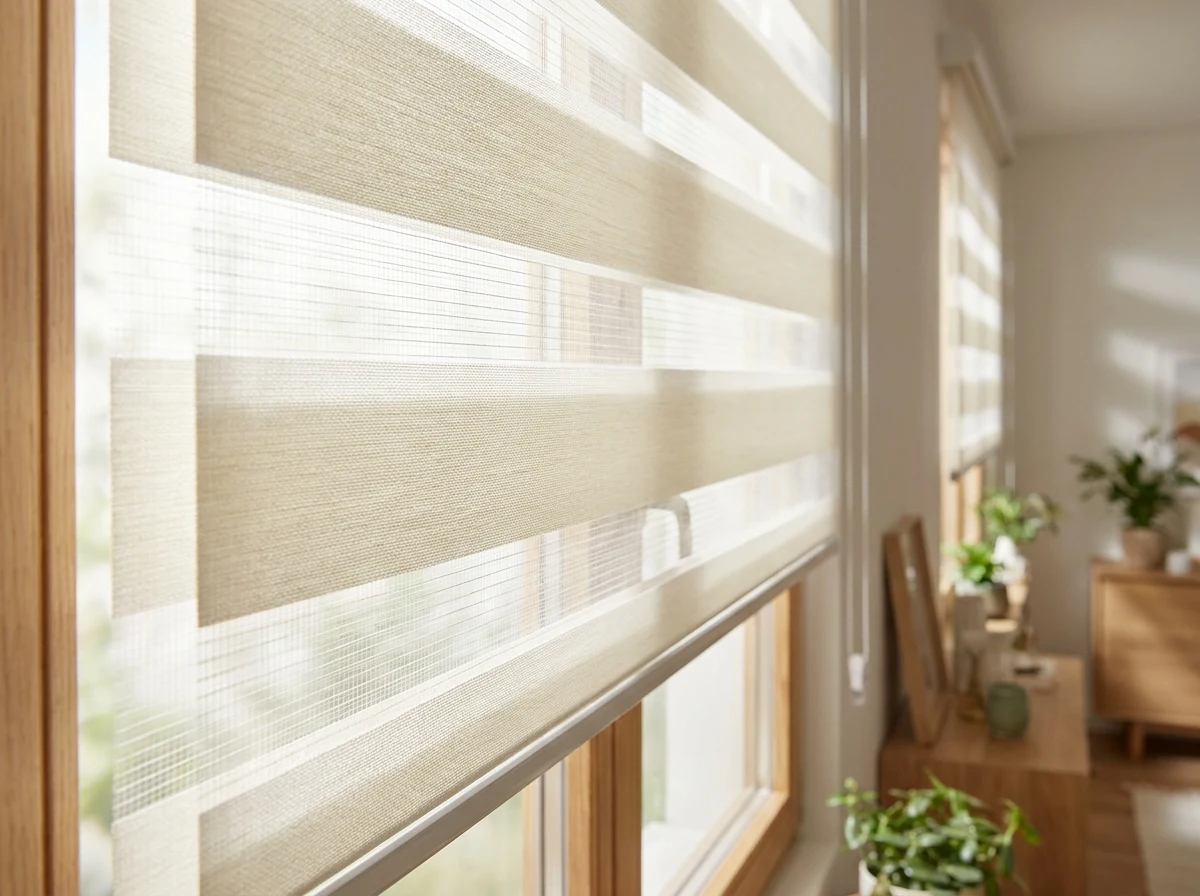
Day-night blinds
The same roller hardware, banded — tune light and privacy without dropping the whole blind.
Day-night blinds →Roller blinds
The workhorse of the whole house: a fabric panel on a made-to-measure tube, spring, chain or motor driven, fitted to the exact glass — from the open-plan living wall to the smallest bathroom window.
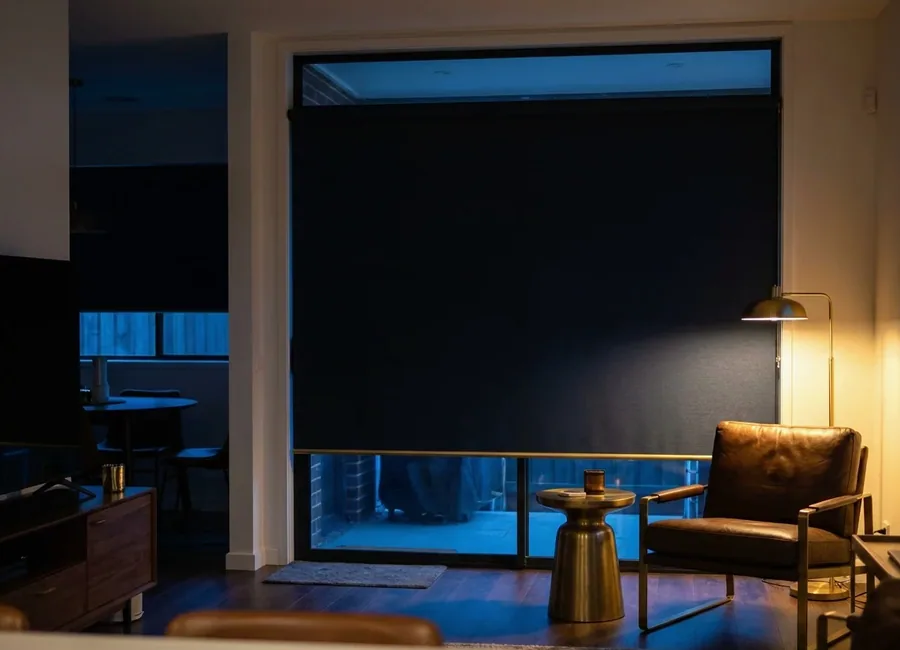
Blockout gives you a true dark room: nurseries, main bedrooms, media rooms, and anyone working shifts. It also carries a genuine thermal benefit, acting as an insulating layer against summer heat and winter cold.
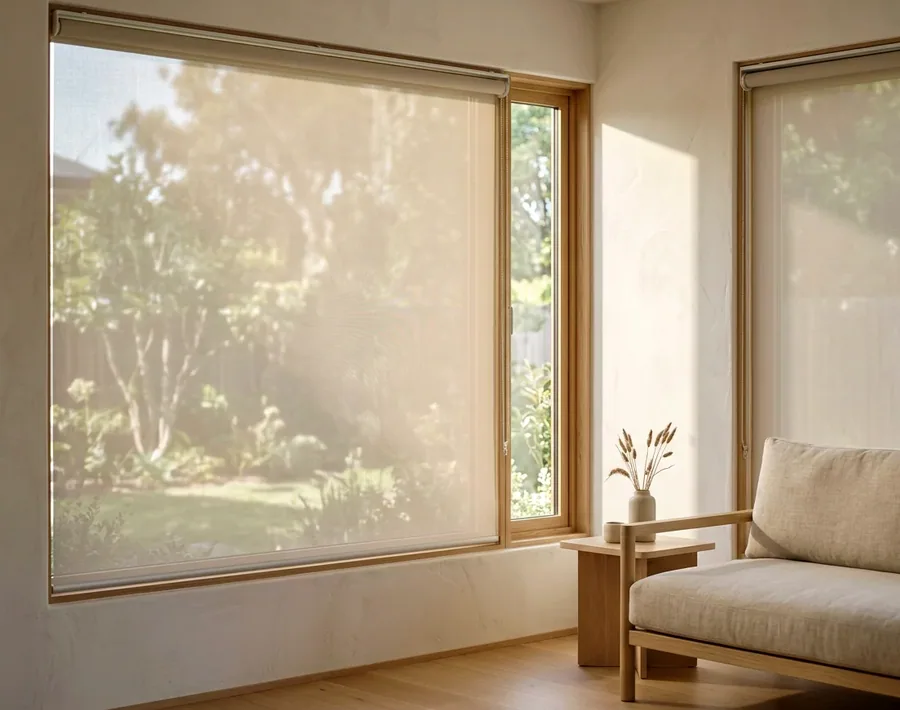
Sunscreen fabric (openness factor 3%, 5% or 10%) is mesh weave that cuts glare and UV while keeping the view — the standard answer for the big open-plan glass typical of newer estate homes. The lower the openness percentage, the more heat and glare it blocks, at a small cost to the view. During the day it gives privacy; at night, with the lights on inside, it reverses — pair it with a blockout layer or curtains in bedrooms.
Light-filtering fabric sits between the two: it softens light and gives full privacy without the view.
Modern open-plan homes, big glass, easy cleaning, and a budget that can flex from entry-level fabrics right up to premium wide-width and motorised systems. On very wide unbroken spans or in a heritage-cottage setting, a venetian sometimes suits the room's character better — we'll say so honestly at the measure.
Priced per square metre, installed, and offered as a guide rather than a quote. A manual roller — chain or spring, in blockout, sunscreen or light-filter cloth — falls between R1,000 and R1,600 per square metre. Plain blockout in a standard colour sits at the bottom of that band; a low-openness sunscreen in a wide width, or a double bracket carrying two fabrics on one window, pushes toward the top.
Motorise the same blind and it moves to R2,500 to R3,800 per square metre, taking in the tube motor, the remote or keypad and the setup on fitting day. Bear two things in mind. Small windows carry a minimum charge, since a bathroom pane needs the same brackets, tube and ladder time as a big one. And the figure that counts is the one written against your own openings after the free measure, when the spans, the reveal depths and the split points are known instead of guessed.
Roughly 3m of fabric width before the tube starts to deflect and the fabric tracks off-centre. Past that we either split the opening into two blinds with a central join, or link motorised blinds so they move together off one button — which is what most of the wide sliding-door runs in The Wilds end up needing.
No, and anyone who tells you otherwise is selling. During the day a sunscreen reads as privacy because it is brighter outside than in; after dark with the lights on, that reverses and you can be seen. Bedrooms and bathrooms want blockout, or a double bracket carrying sunscreen and blockout on the same window.
Chain is the default and comes with a child-safe tensioner fitted as standard. Spring-assist suits small and mid-size windows where you want nothing hanging at all. Motors earn their place on wide, high or hard-to-reach glass — the windows that otherwise quietly stop being used.
The same roller hardware, banded — tune light and privacy without dropping the whole blind.
Day-night blinds →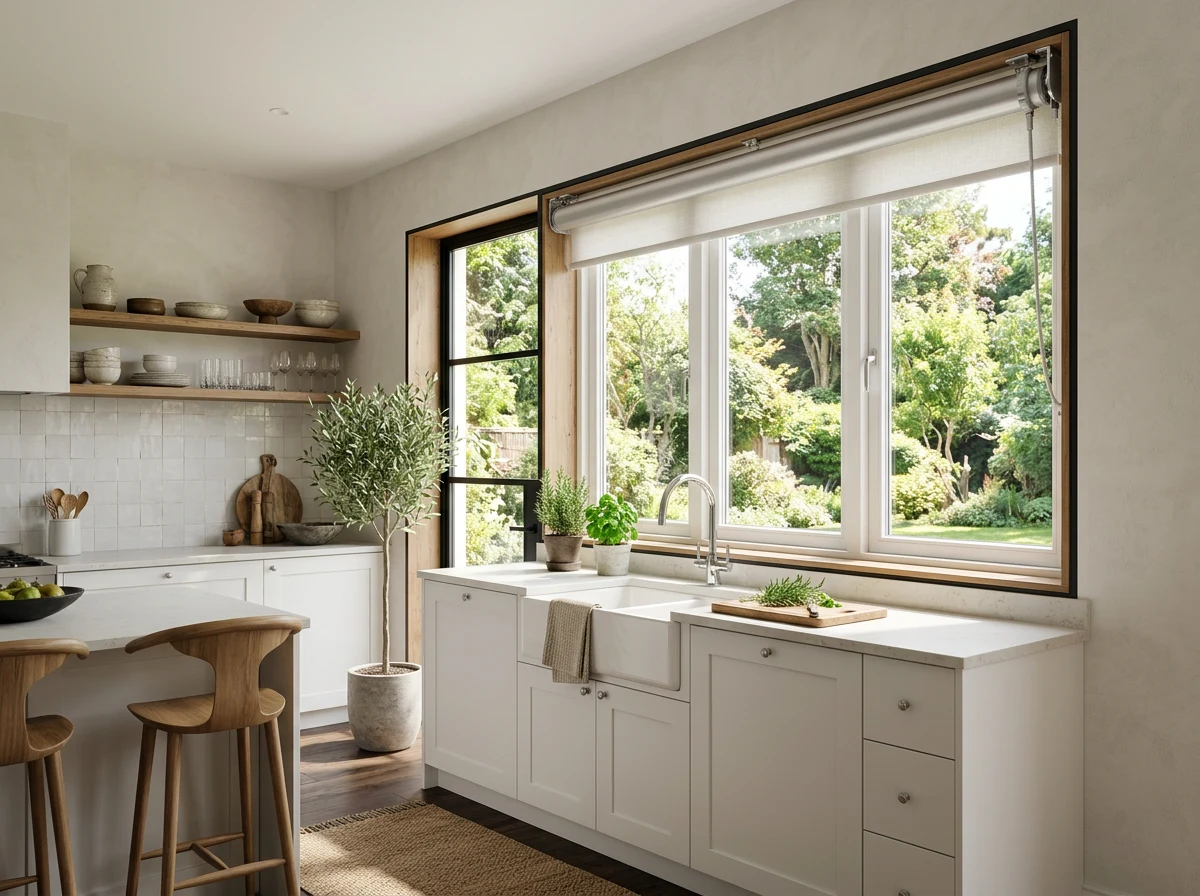
For the spans a chain can't handle, and the high glass nobody reaches twice.
Motorised blinds →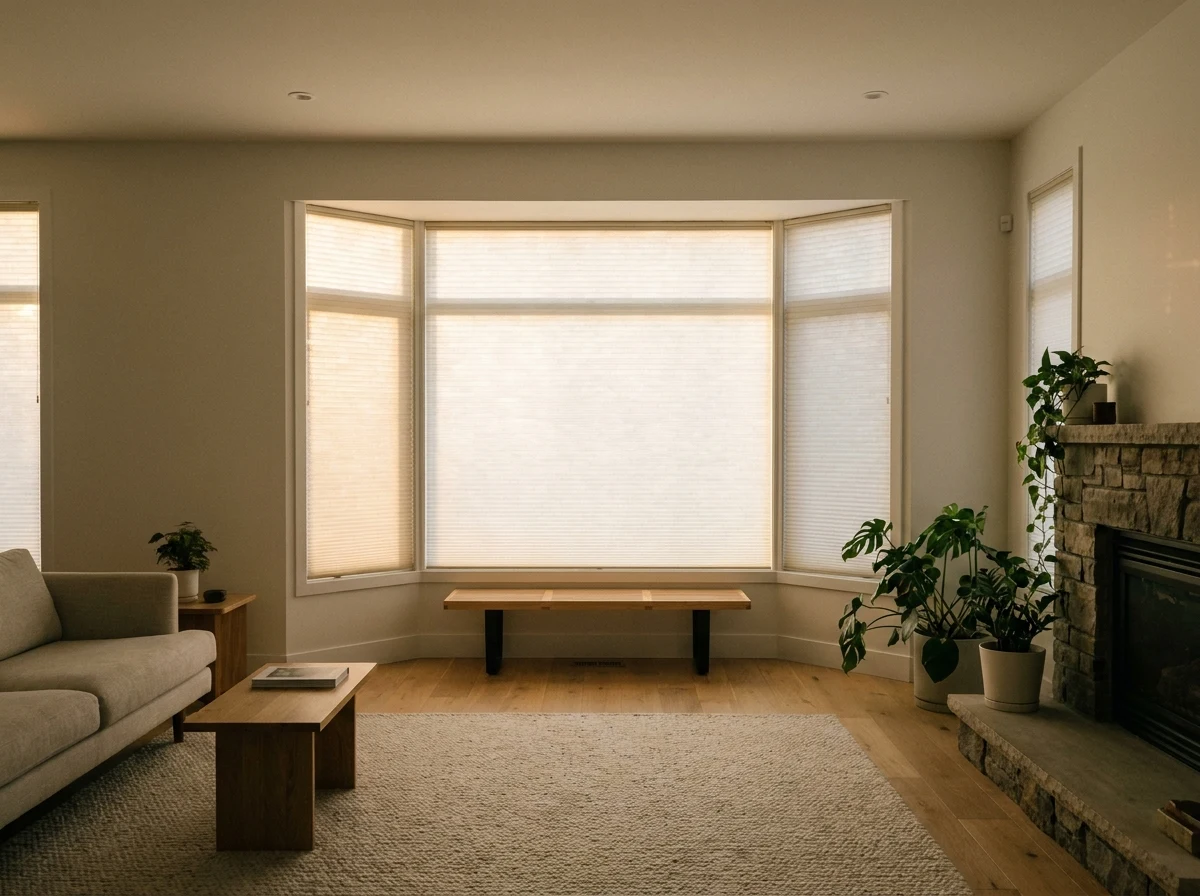
Where the room needs insulation as much as it needs shade.
Cellular blinds →Blockout and sunscreen rollers go up the same way in every estate we cover — wide living-room glass in Woodhill Golf Estate, first-fit new builds in Six Fountains, family homes in Boardwalk Meander, and the double-volume glazing typical of Mooikloof.
A consultant measures every window on site and gives you an itemised, per-window quote — free, with no obligation.
Request my free measure →