
What we measure for out here
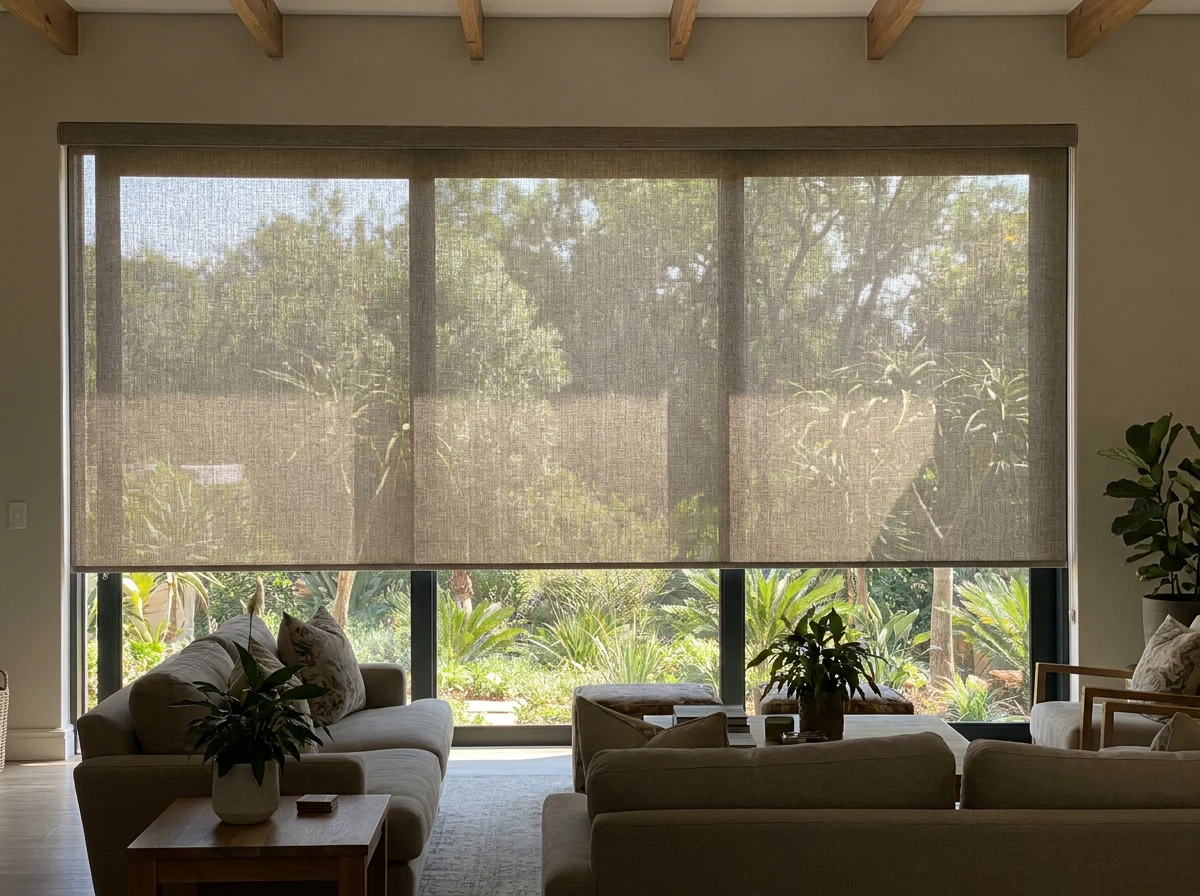
Woodhill's homes are built around the fairway outlook — big living-room glass and wraparound patio doors that flood rooms with afternoon sun. The brief is nearly always the same: keep the view of the course, lose the glare and the heat it brings with it.
- Sunscreen roller blinds in the 3–5% openness range are the default on the fairway-facing glass — see our roller blinds page.
- Motorised control for wide living-room spans and higher windows — one remote, the whole wall of glass. See motorised blinds & automation.
- Folding-arm awnings over the patio for entertaining, wind-sensored so a highveld storm doesn't catch it open.
Golf estates often carry aesthetics-committee guidelines for anything visible from outside — we specify clean, neutral profiles and can supply the documentation most estates ask homeowners to submit for exterior work.
The fairway elevation, hour by hour
A course-facing window behaves differently from one that looks at other houses, and the difference is worth understanding before you choose a fabric. There is nothing upwind and nothing in the way: no neighbouring roofline breaks the low sun in the last two hours of the day, so the light arrives flat and horizontal, straight under the eaves, at exactly the height a television or a laptop sits. Mown turf then adds a second helping, bouncing light upward off the fairway into rooms that the roof overhang was supposed to protect.
That is why openness factor matters more here than colour does. A tight 3% mesh in a dark charcoal cuts the glare hardest and keeps the course sharply visible through it, because a dark weave absorbs light rather than scattering it. A pale mesh in the same openness looks softer in the room but hazes the view and can glow when the sun hits it directly. We bring both to the measure and hold them up on the actual elevation, because a decision made from a sample book indoors is nearly always the wrong one.
One honest caveat: any blind on the inside of the glass is dealing with heat that has already entered the room. A good mesh takes a real bite out of it, but on a west-facing living wall that genuinely overheats in February, shading outside the glass does more, and we will say so rather than sell a mesh to do a job it cannot finish.
Estate guidelines, and what we will not guess at
Golf estates commonly run aesthetics guidelines covering anything visible from the course or the street, and the usual requirements concern the colour and profile of what shows from outside rather than what you choose indoors. We keep exterior profiles clean and neutral as a matter of course, and we can supply the product documentation estates typically ask a homeowner to submit for exterior work.
What we will not do is tell you what your estate permits. We do not hold anybody’s rulebook, so anything mounted outside the building line — an awning over the patio, an exterior screen — should be cleared with the estate office or the aesthetics committee before it is ordered, and we would rather raise that at the measure than after a delivery. Interior blinds with a consistent neutral backing are the straightforward part, and keeping that backing the same across every window is what stops a house reading as a patchwork from the fairway.
Read the Wilds Light & Glass Field Guide — what the Highveld sun does to each elevation here through the year, and what we’d fit on it, with sources.