
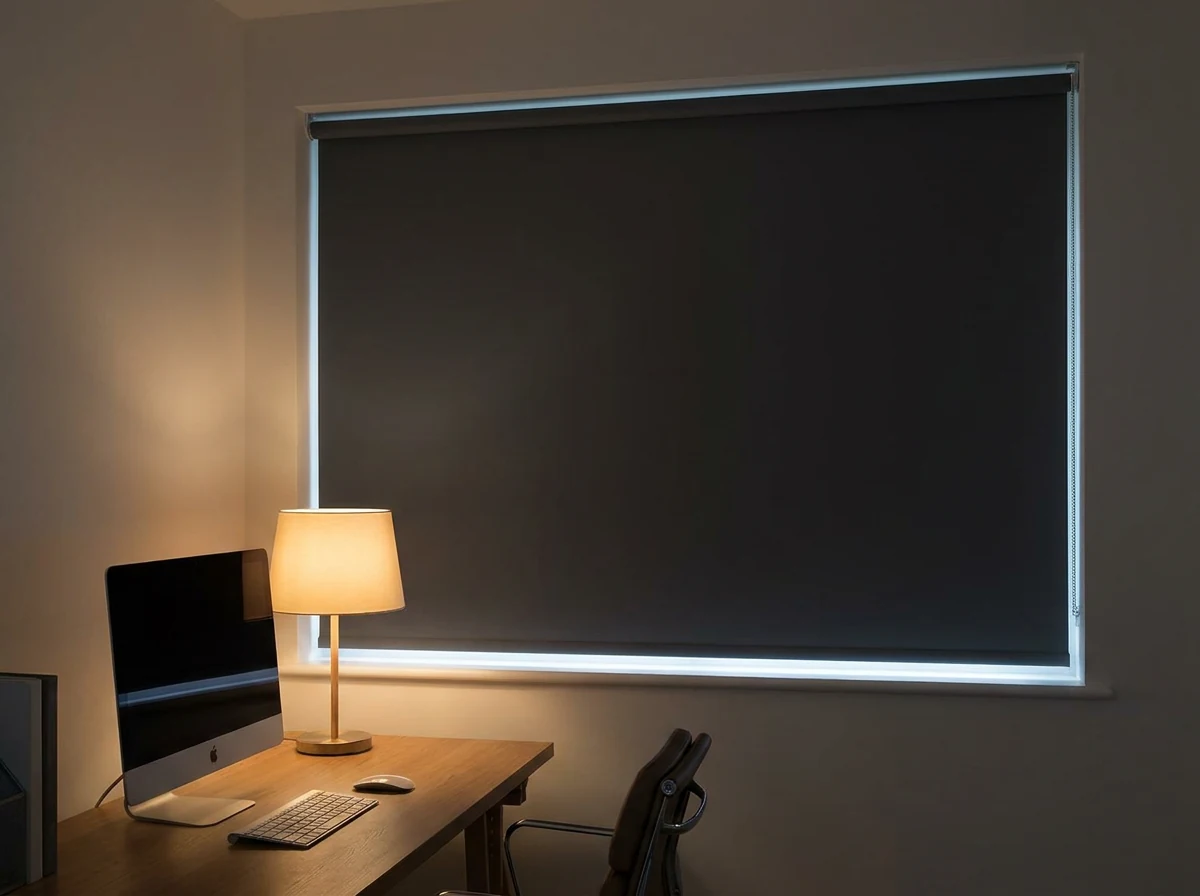
Roller blinds
Simpler, cheaper, and still the right answer where insulation isn't the point.
Roller blinds →Cellular / honeycomb blinds
Pleated fabric forming hexagonal air cells in profile — trapped air is insulation, which makes this the best-performing interior blind for comfort in both directions.

Single cells suit milder rooms; double cells do the serious thermal work — a soft buffer that helps keep rooms cooler in summer and warmer in winter, with the added benefit of the cells absorbing sound. We keep the claims qualitative: genuine comfort and a lower heating and cooling load, not invented percentages.
Pretoria East's highveld climate swings hard — baking early-afternoon sun for much of the year, then cool mornings and the odd winter frost. A cellular blind's insulating layer earns its keep on both ends of that swing, especially in bedrooms, nurseries and the room above the garage that's "always freezing."
Bedrooms and nurseries wanting dark, quiet and warm; the double-volume living room with a real heating and cooling bill; and any new-build room where the specification is being planned properly from the start rather than patched later.
A guide per square metre, installed. Manual cellular blinds sit between R1,500 and R2,800, and the spread inside that band is wider than people expect: single-cell in a light-filtering fabric is at the bottom, while a double-cell blockout with side channels — the specification that actually earns its keep on a hot west bedroom — is at the top.
Motorise it and you are into R3,000 to R4,800 the square metre. Cellular blinds are frequently the ones worth automating, because they are often specified for skylights and high glass where nothing else is reachable. Small windows carry a minimum charge, and the exact price for each opening is set after the free measure and written into the quote before an order is placed.
Double cell traps two pockets of air instead of one, so it does noticeably more thermal work — worth it on bedroom windows, west elevations and the room above the garage. Single cell is fine in mild, well-shaded rooms and costs less. We'll say which is which per window at the measure rather than upselling the whole house.
A little, over years. They're vacuumed out with a brush head; the fabric is anti-static and the cells sit vertically, so it's far less than people expect. What they genuinely don't like is a steamy bathroom — put an aluminium venetian there instead.
Yes, and it's the single best reason to choose cellular on an overlooked window: drop the top rail for sky and daylight while the bottom stays closed for privacy. It's a favourite in street-facing bedrooms and bathrooms.
Simpler, cheaper, and still the right answer where insulation isn't the point.
Roller blinds →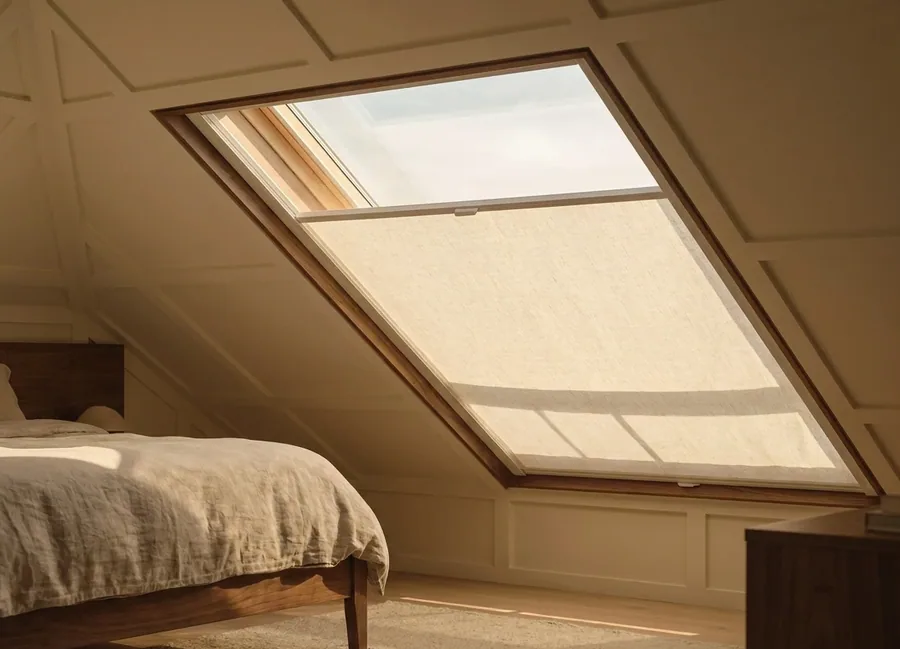
The cell structure holds its shape on a rake — which is why it suits gable glass.
Ask about shaped blinds →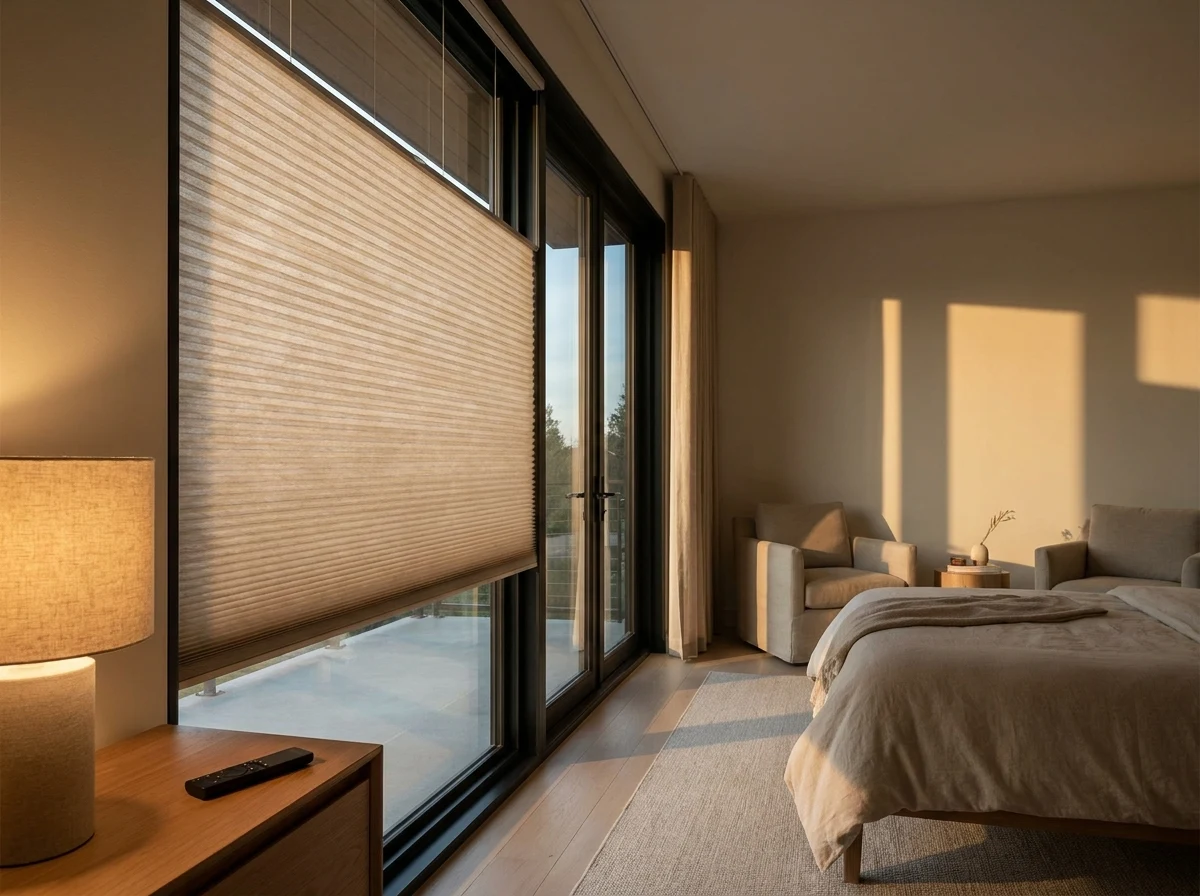
Cordless and motorised operation, with the slimmest stack of any blind when raised.
Motorised blinds →The insulating cell earns its keep on both ends of the highveld's temperature swing wherever we fit it — bedroom wings in Mooikloof, first-fit new builds in Six Fountains, and the fairway-facing glass of Woodhill Golf Estate and Boardwalk Meander.
A consultant measures on site and talks you through single vs double cell for each room — free, with no obligation.
Request my free measure →