
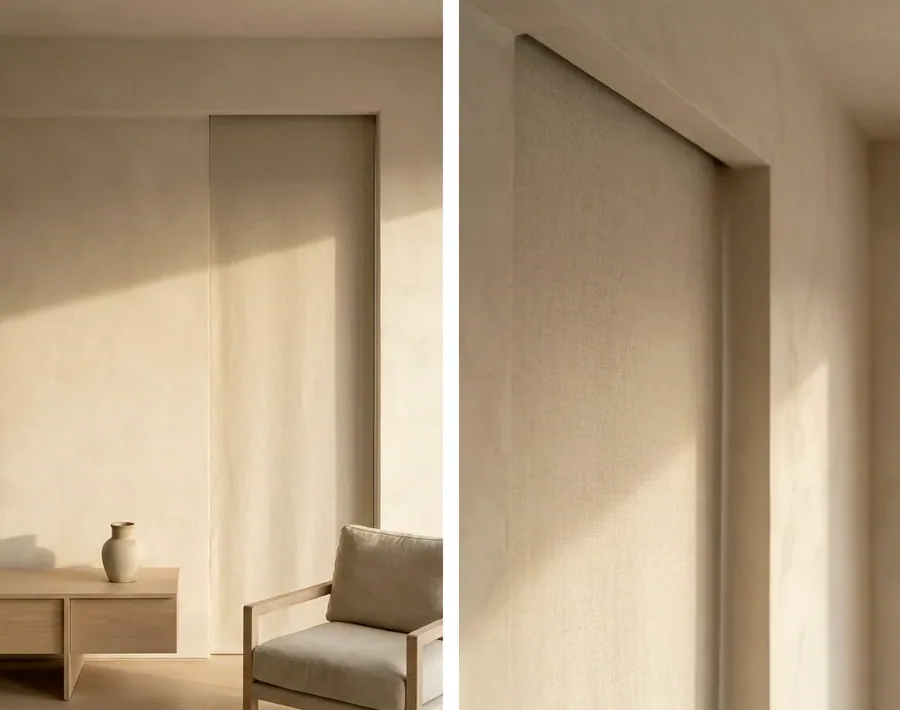
Concealed blind boxes
Planned into the bulkhead at build stage, so all you see is glass.
Ask about concealed boxes →Motorised blinds & automation
Tubular motors built into the blind roll, controlled by remote, wall switch, phone app, schedule or sensor. On the wide and high glass typical of newer estate homes, motorisation stops being a luxury and starts being the only practical way to use the blind at all.

Sold by lifestyle, not tech spec: a handset remote for one blind or a whole wall of them; app control from the couch or the office; schedules so bedroom blinds open with sunrise and the west wall drops at three in summer; sun sensors that react automatically on hot elevations; and — safety-critical for anything exterior — wind sensors that retract awnings and zip screens before a highveld thunderstorm does the damage for you.
Spans too wide or heavy for a chain, blinds above stair voids and double-volume glass, concealed ceiling-recess systems, and any multi-blind wall of glass where "one button, six blinds" is the whole point. It's also the safest operation there is — no dangling chains, nothing for a small child to reach.
Quality motors are quiet, not silent, and carry multi-year guarantees; battery motors need that periodic charge, which we set expectations on at quote stage rather than after the fact.
Motorisation does not carry a price by itself: the motor exists only as part of a product. Automated products, taken across the board, install at R2,500 to R7,500 for every square metre. A motor on a plain indoor roller is the cheapest thing in the range; a day-night or cellular blind sits above it; and an outdoor system built to live in Highveld sun, wind and hail occupies the top of the band.
Sensors, keypads and hubs are quoted as their own lines on their own rather than hidden in the rate, letting you weigh each opening what is worth having. Small openings carry a minimum charge. Everything above is orientation only — the binding number arrives after the free measure, once we know how many motors are involved, what they are driving and how each one is to be powered.
Before the ceilings close and before the plaster goes on. That's when wired motors, concealed blind boxes and a plug point above the window cost almost nothing to allow for. Afterwards everything still works, it just has to be battery-driven or surface-mounted.
A wind sensor retracts it, automatically, whether anyone is home or not. Highveld storm season runs roughly October to March and builds fast, so on anything exterior we treat the sensor as part of the product rather than an optional extra.
No. A handset remote is enough for most homes and costs nothing to run. App and voice control are available if you want them, and schedules and sun sensors work on their own without a phone in the loop. We don't sell subscriptions.
Planned into the bulkhead at build stage, so all you see is glass.
Ask about concealed boxes →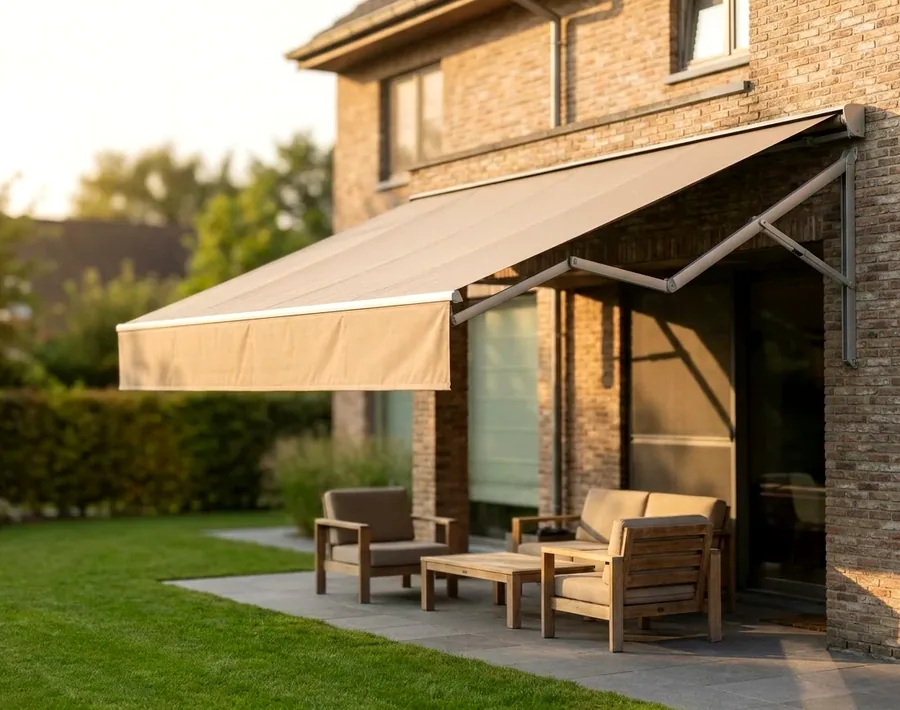
The clearest case for a wind sensor anywhere on the house.
Ask about awnings →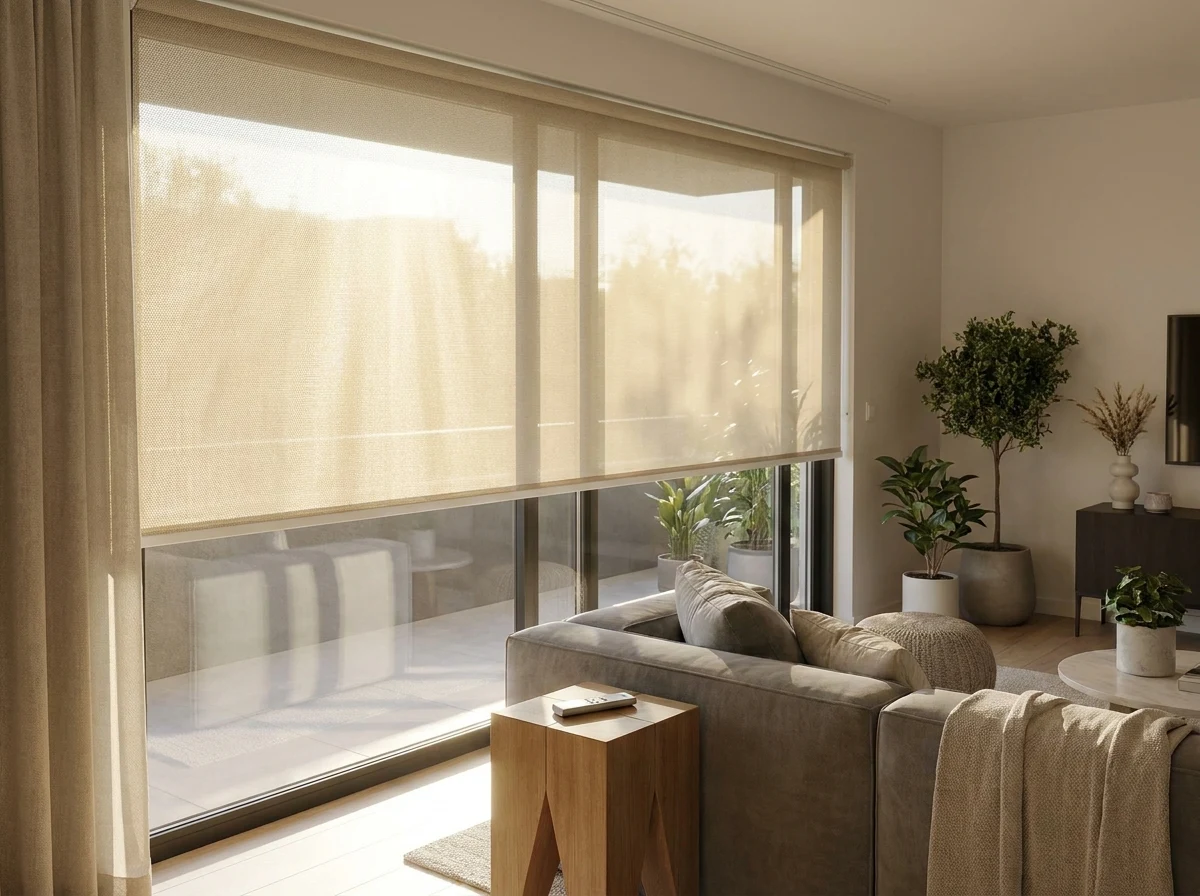
The fabric doing the work — blockout and sunscreen, motorised or not.
Roller blinds →Wide spans and double-volume glass make motorisation close to standard practice across the estates we serve — wired in at plaster stage for new builds in Six Fountains and Boardwalk Meander, retrofitted with battery motors in Woodhill Golf Estate, and specified for the raked, multi-blind walls typical of Mooikloof.
A consultant assesses your spans and glazing on site and specs the right motor and control layer for each room — free, with no obligation.
Request my free measure →